Wandering Through Casablanca: Where Architecture Tells a Thousand Stories
Have you ever walked through a city and felt like every building was whispering secrets from the past? That’s exactly what happened when I wandered through Casablanca. Far from just a commercial hub, this Moroccan city is a living canvas of architectural fusion—Art Deco, Mauresque, colonial, and modern designs standing side by side. It’s not just about sightseeing; it’s about feeling the rhythm of history in the curves of a doorway or the shadow of a minaret. The city breathes through its structures, each one a chapter in Morocco’s evolving story. To walk its streets is to witness a dialogue between eras, where tradition and innovation coexist in quiet harmony.
First Impressions: Casablanca Beyond the Postcard
Casablanca is often misunderstood. For many, the name evokes a single image—the grand silhouette of the Hassan II Mosque rising from the Atlantic coast. Yet to reduce this city to one landmark is to miss its soul. As you step beyond the wide boulevards and official facades, a different Casablanca reveals itself: one of textured walls, weathered shutters, and quiet alleyways where laundry flutters between balconies like flags of daily life. The air carries a blend of sea salt, cumin, and the warm scent of msemen frying on street corners. Here, the city doesn’t perform for tourists; it simply lives.
What makes Casablanca unique among Moroccan cities is its layered identity. Unlike Fez or Marrakech, which are often celebrated for their preserved medinas, Casablanca wears its history on its sleeve—not as a museum piece, but as a dynamic, evolving narrative. This is a city that grew rapidly during the French protectorate era, absorbing foreign influences while holding fast to Moroccan craftsmanship and spiritual roots. The result is an urban landscape where colonial-era administrative buildings stand beside traditional riads, and sleek glass towers reflect the ocean just blocks from bustling souks.
The architecture here is not merely functional; it speaks. A wrought-iron balcony might echo Parisian elegance, yet its scrollwork mimics Islamic geometric patterns. A doorway carved with floral motifs could be inspired by Andalusian design, but the wood is cedar from the Middle Atlas, shaped by local hands. These are not accidental combinations—they are deliberate acts of cultural synthesis. Walking through neighborhoods like Habous or Quartier Habitation, you begin to see that every building tells a story of adaptation, resilience, and quiet pride.
For the observant traveler, Casablanca offers a rare kind of discovery: not the thrill of the exotic, but the deeper satisfaction of understanding. It invites you to slow down, to look closely, to notice how light falls across a zellige-tiled wall at 4 p.m., or how the shadow of a minaret stretches across a courtyard at prayer time. This is not a city of postcard moments, but of cumulative impressions—each street corner adding another layer to the story.
The Soul of the City: Art Deco Gems in the Medina Outskirts
If Casablanca has a hidden architectural heartbeat, it beats in the quiet streets just beyond the old medina. Here, tucked between markets and modest homes, lie some of the best-preserved Art Deco buildings in North Africa. Constructed primarily in the 1920s and 1930s during the French urban expansion, these structures reflect a moment when modernism met Mediterranean sensibility. They are not flamboyant like Miami’s South Beach, nor austere like European functionalism. Instead, they possess a quiet elegance—sleek lines softened by time, pastel facades warmed by the North African sun.
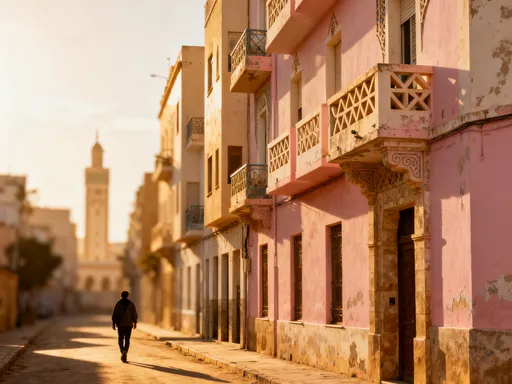
Take Avenue Mohammed V, once known as Rue d’Anfa during the colonial period. Along this thoroughfare and its side streets, buildings rise with stepped facades, rounded corners, and nautical motifs—tributes to the ocean nearby and the modernist love for streamlined design. Balconies curve like parentheses, enclosing private worlds above the street. Many feature geometric stonework, sunburst patterns, and stylized floral reliefs, all executed with precision. What makes these buildings truly special is how they were adapted to the local climate: deep overhangs provide shade, while latticed vents allow breezes to flow through, blending form with function in a way that feels both intentional and intuitive.
Yet these architectural treasures remain largely overlooked. Tourists flock to the mosque or the Corniche, but few venture into the residential districts where these Art Deco gems reside. This is not accidental—many of these buildings are still privately owned, their courtyards hidden behind heavy wooden doors. Some have been carefully maintained; others show signs of neglect, their paint peeling, their ironwork rusting. Still, even in decay, they radiate charm. A single restored building on Rue Lafayette, with its mint-green shutters and polished stucco, can stop you in your tracks.
For those eager to explore, the best time to walk these streets is late afternoon, when the sun slants at a low angle, casting long shadows and highlighting textures. Bring a camera, but move with respect—this is not a theme park, but a lived-in city. A gentle nod to a resident sitting on a doorstep, a quiet word in French or Darija, can open doors, sometimes literally. Some homeowners are proud of their buildings and happy to share stories of their family’s history within these walls. These moments of connection transform sightseeing into something richer: a conversation across cultures and generations.
Mauresque Magic: When Tradition Meets Design
While Art Deco speaks of modernity, the Mauresque style is where Casablanca’s architectural soul finds its deepest expression. This hybrid aesthetic—sometimes called Moroccan Neo-Moorish—emerged in the early 20th century as a deliberate effort to create a distinctly Moroccan identity within a colonial urban framework. Rather than imitate European styles wholesale, architects and craftsmen blended Islamic design principles with contemporary building techniques. The result was a new language of beauty, one that honored the past without being trapped by it.
Look closely at buildings like the former Palace of Justice or the Central Post Office, and you’ll see the hallmarks of Mauresque design: horseshoe arches with intricate carved borders, wooden mashrabiya screens filtering sunlight, and zellige tilework in complex geometric patterns. These are not mere decorations; they are symbols of continuity. The zellige, for instance, is hand-cut from colored ceramic, assembled without glue or mortar, a technique passed down through generations. The cedar wood used for doors and ceilings is often carved with verses from the Quran or floral motifs inspired by nature—each piece a meditation in wood.
What sets Mauresque architecture apart is its balance. It does not reject modernity—many of these buildings have steel frames, electric lighting, and functional layouts—but it insists on cultural dignity. The style was championed by architects like Edmond Brion and Auguste Cadet, who worked closely with local artisans to ensure authenticity. In doing so, they created buildings that felt both contemporary and rooted, a rare achievement in any colonial context.
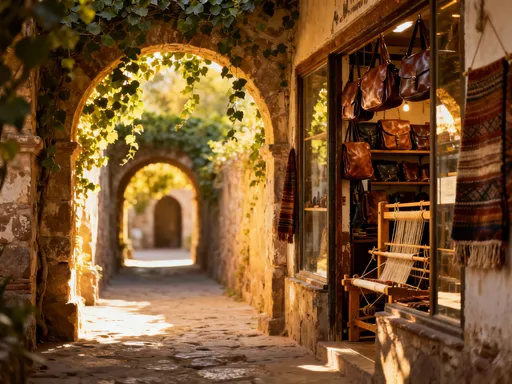
Today, walking through the Habous Quarter—a planned neighborhood built in the 1930s as a “new medina”—offers one of the best opportunities to appreciate Mauresque design in daily life. The streets are narrow and shaded, lined with two- and three-story buildings featuring arched entrances, inner courtyards, and rooftop terraces. Shops sell traditional crafts, but residents still live in the upper floors, maintaining a vibrant community atmosphere. The area was designed to blend modern hygiene and urban planning with traditional Moroccan living, and in many ways, it succeeded.
For visitors, the lesson is simple: look up. So much of the beauty in Mauresque architecture is above eye level—the carved cornices, the painted ceilings, the delicate iron grilles. Take your time. Sit in a café with a glass of mint tea and observe the details. Notice how light plays across a mosaic wall, or how a single beam of sun illuminates a wooden lintel carved with interlocking stars. These are not just aesthetic choices; they are acts of cultural preservation, quietly asserting identity through design.
Hassan II Mosque: A Masterpiece Rising from the Sea
No journey through Casablanca’s architectural landscape is complete without a visit to the Hassan II Mosque, a structure so breathtaking that it seems to defy both gravity and time. Perched on a rocky outcrop above the Atlantic Ocean, its minaret soars to 210 meters, making it one of the tallest religious structures in the world. What makes this mosque extraordinary is not just its scale, but its symbolism. Commissioned by King Hassan II and completed in 1993, it was envisioned as a bridge between Morocco’s Islamic heritage and its modern aspirations.
The mosque’s location is deeply intentional. Unlike most mosques, which are built inland, this one extends over the sea, with a glass floor in part of the prayer hall allowing worshippers to see the waves beneath their feet. This design element, both daring and poetic, connects the spiritual with the elemental. According to tradition, the site was chosen based on a verse from the Quran: “The throne of God was on the water.” The mosque’s position—half on land, half over water—embodies this idea, suggesting that faith, like the ocean, is vast, eternal, and ever-moving.
The architecture itself is a masterclass in synthesis. The minaret is clad in zellige tiles, its surface shimmering with blue and green mosaics that catch the light throughout the day. The roof, made of retractable glass, can open to the sky—a rare feature that allows natural light and ventilation. Inside, the prayer hall spans over 20,000 square meters and can accommodate 25,000 worshippers. The craftsmanship is staggering: hand-carved stone, inlaid marble, and cedar wood ceilings that rise like the ribs of a great ship.
What is most remarkable is that nearly all the artisans who worked on the mosque were Moroccan. Over 35,000 craftsmen contributed to its construction, using traditional techniques passed down through families. The zellige tilework alone required thousands of hours of meticulous labor. Even the chandeliers, some of the largest in the world, were designed and assembled locally. This was not a foreign import, but a national achievement—a statement that Morocco could build something of world-class beauty using its own hands and heritage.
For non-Muslim visitors, guided tours are available outside prayer times, offering access to the courtyard, ablution fountains, and parts of the interior. The experience is one of awe, not just at the scale, but at the harmony of the design. The call to prayer echoes across the plaza, blending with the sound of waves. Seagulls circle the minaret, which at night emits a laser beam pointing toward Mecca—a modern touch rooted in ancient tradition. To stand here is to feel the weight of history and the pulse of the present, all in one place.
Modern Contrasts: Skyscrapers and Urban Evolution
While Casablanca honors its past, it does not live in it. The city is also home to Morocco’s most dynamic skyline, a testament to its role as the country’s economic engine. In districts like Sidi Maarouf, Bourgogne, and the Anfa business quarter, glass towers rise alongside mid-century villas, creating a skyline that is both aspirational and uneven. These modern structures—offices, luxury apartments, shopping malls—reflect the ambitions of a growing middle class and an economy increasingly tied to global markets.
The contrast between old and new is striking. A 1930s Art Deco building might stand just meters from a sleek high-rise with mirrored windows. In some cases, the juxtaposition works—modern buildings that incorporate traditional motifs, such as arched entrances or geometric facades, show a sensitivity to context. In others, the clash is jarring: a massive concrete tower casting a shadow over a delicate Mauresque villa, or a shopping complex replacing a historic neighborhood.
This tension raises important questions about urban development. How does a city grow without losing its soul? How can modernization coexist with preservation? There are no easy answers, but Casablanca’s evolution offers valuable lessons. In recent years, there has been a growing awareness of the need to protect architectural heritage. Local organizations and urban planners have begun advocating for the restoration of historic buildings, and some developers now integrate conservation into new projects.
One example is the renovation of the Villa des Arts, a former residence turned cultural center, which now hosts exhibitions and concerts. Another is the adaptive reuse of old bank buildings as boutique hotels or cafes, preserving their facades while giving them new life. These efforts show that progress does not have to mean erasure. With thoughtful planning, a city can honor its past while embracing the future.
For visitors, this duality is part of what makes Casablanca so compelling. You can spend the morning admiring 1930s stonework and the afternoon in a contemporary art gallery housed in a glass tower. The city doesn’t ask you to choose between old and new; it invites you to see them together, as parts of a single, unfolding story.
Hidden Courtyards and Local Life
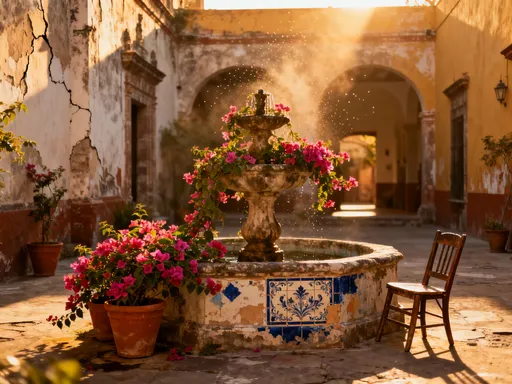
Beyond the public buildings and grand facades lies another world—one that most tourists never see. Behind unassuming doors in quiet neighborhoods are private courtyards, the heart of traditional Moroccan domestic life. These spaces, often part of riad-style homes, are oases of calm: fountains trickle in the center, orange trees stretch toward the sky, and walls are lined with hand-painted tiles in cobalt blue, emerald green, and terracotta red. The air is cooler here, shielded from the noise and heat of the streets.
Gaining access to these spaces requires patience and respect. Many are private family homes, not museums. But with a friendly conversation, a shared cup of tea, or an introduction through a local guide, some families are happy to welcome curious visitors. These moments are not transactional; they are human. A grandmother might gesture to a tile pattern and explain that it was made by her father’s cousin. A child might point to a bird nesting in the courtyard fig tree. These are not staged experiences—they are glimpses into real life.
The architecture of these homes reflects a philosophy of inward focus. Unlike Western homes that emphasize outward presentation, Moroccan riads are designed to turn inward, creating a sanctuary for family and reflection. The courtyard is the center of everything—light, air, and social life flow through it. Rooms open onto it, and rooftops provide space for evening gatherings. Even in modern apartments, this principle endures: balconies face internal gardens, and windows are often latticed to preserve privacy.
These spaces remind us that architecture is not just about monuments; it’s about how people live. The beauty of a zellige pattern is not only in its symmetry, but in how it catches the morning sun as a mother prepares breakfast. The sound of water in a fountain is not just decorative—it is soothing, a constant presence in daily routines. To witness these moments is to understand that culture is not preserved in isolation, but lived, day after day.
Wandering with Purpose: How to See Casablanca Like a Local
To truly experience Casablanca, you must wander with intention. This is not a city for checklist tourism. You won’t “see it all” in a day, nor should you try. Instead, choose a neighborhood and explore it slowly. Begin in the Habous Quarter, where the blend of Mauresque design and daily life creates a welcoming rhythm. Walk the side streets of Avenue Mohammed V to discover Art Deco facades bathed in golden light. Visit the Anfa market to see how locals shop, cook, and socialize.
When photographing, be mindful. Ask permission before taking pictures of people or private homes. A smile and a simple “Mumkin asta’kil sura?” (Can I take a photo?) go a long way. Focus not just on grand buildings, but on details—the pattern of a gate, the color of a door, the way light falls on a wall. These small moments often tell the richest stories.
Engage with the city on foot. Public transportation exists, but walking reveals what buses and taxis cannot. You’ll notice changes in architecture block by block, hear different dialects, smell different foods. Stop at a sidewalk café. Order a café noir or fresh orange juice. Watch the world pass by. Let the city unfold at its own pace.
Finally, remember that architecture is more than stone and mortar. It is memory, identity, and aspiration. In Casablanca, every building has a story—not just of who built it, but of who lives there now. To wander here is not just to see, but to listen. And in that listening, you may find that the city whispers back, offering not just beauty, but belonging.