You Won’t Believe What I Found in Saint Petersburg’s Hidden Corners
Saint Petersburg isn’t just a city—it’s a living museum of architectural wonders. From golden domes to pastel palaces, every street feels like a page from a history book. I went expecting beauty, but what I found was pure magic. This city doesn’t just impress—it stuns. If you're planning a trip and want to truly experience its soul, knowing where to look—and how to explore—makes all the difference. The grandeur of its imperial past is visible in every column, archway, and canal reflection. Yet beyond the postcard views lie quieter moments: a weathered door carved with mythological figures, a courtyard blooming with lilacs in late spring, or the soft glow of a streetlamp on wet cobblestones at dusk. These are the details that transform a visit into a lasting memory.
First Glimpse: Arrival in a City of Palaces
Stepping off the train at Moscow Station or gliding into the city by river, one is immediately struck by the harmonious order of Saint Petersburg’s skyline. Unlike many European capitals that evolved organically over centuries, this city was conceived as a grand artistic statement—a symbol of Russia’s emergence as a modern European power. Designed by architects such as Domenico Trezzini and Jean-Baptiste Le Blond under the direction of Peter the Great, the city unfolds in precise symmetry, framed by the wide Neva River and its network of canals. The first view for many travelers is along the embankment near the Winter Palace, where the river mirrors the pale green and white façades of imperial buildings like a painted backdrop.
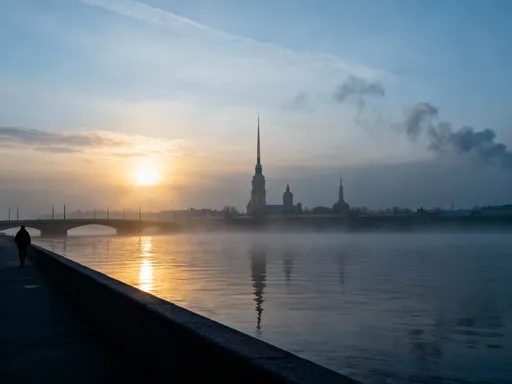
The emotional impact of arriving in Saint Petersburg cannot be overstated. There’s a hush that comes over visitors when they see the spire of the Admiralty piercing the sky, flanked by golden domes and baroque silhouettes. This is not accidental—it was engineered to inspire awe. For the best first impressions, arrive early in the morning. At sunrise, the soft light bathes the pastel walls in warm hues, reducing shadows and enhancing the delicate details of stucco moldings and window surrounds. The absence of crowds during these hours allows for quiet contemplation, turning the experience into something deeply personal rather than merely touristic.
Palace Square, dominated by the immense Winter Palace, offers another powerful introduction. As the former residence of the Tsars and now home to the State Hermitage Museum, the building commands attention with its scale and ornate decoration. Standing in the center of the square, surrounded by neoclassical colonnades and facing the Alexander Column—a single monolithic granite shaft rising 47.5 meters without any visible support—visitors feel the weight of history and ambition. It’s here that the city’s dual identity becomes clear: both a monument to imperial power and a living urban space where people walk, talk, and live among masterpieces.
The Must-See Masterpieces: Where History Meets Design
No architectural journey through Saint Petersburg would be complete without visiting its most celebrated landmarks. Each tells a story not only of artistic achievement but also of national identity and historical transformation. The Church of the Savior on Spilled Blood stands as one of the most visually arresting examples of Russian Revival architecture. Built on the site where Emperor Alexander II was assassinated in 1881, its flamboyant design features colorful onion domes, intricate mosaic interiors, and a fairy-tale silhouette that contrasts sharply with the more restrained styles found elsewhere in the city. Inside, over 7,500 square meters of mosaics depict biblical scenes in vivid detail, crafted using traditional techniques and thousands of shades of glass and stone.
Equally iconic is the Winter Palace, a masterpiece of Baroque architecture designed by Bartolomeo Rastrelli. Its sprawling façade stretches 215 meters along the Neva River, adorned with columns, pilasters, and gilded sculptures. The palace’s interior is even more astonishing—grand staircases, mirrored halls, and private apartments preserved in near-original condition. To fully appreciate its scale, visitors should allow at least half a day to explore the Hermitage Museum, which occupies the palace and several adjacent buildings. Tickets can be purchased online in advance to avoid long queues, and weekday mornings typically offer the most comfortable viewing conditions.
St. Isaac’s Cathedral, completed in 1858 after 40 years of construction, remains one of the largest domed structures in the world. Its golden dome, visible from nearly every part of the city center, is made of cast iron and covered in gold leaf. Visitors can climb the 262-step spiral staircase to the colonnade for panoramic views of Saint Petersburg—an experience especially rewarding at sunset. While the cathedral no longer functions as an active place of worship, it operates as a museum and concert venue, preserving its cultural significance. For those interested in architectural engineering, the use of iron frameworks and granite cladding represents a transition from traditional masonry to modern construction methods.
Beyond the Postcards: Hidden Architectural Gems
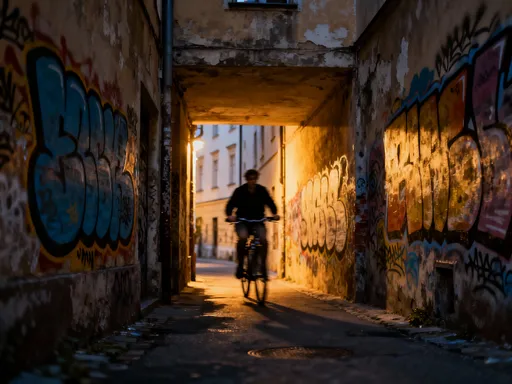
While the major landmarks draw millions each year, some of the most rewarding discoveries in Saint Petersburg lie off the beaten path. These are the places where time seems to slow—the quiet courtyards hidden behind unassuming gates, the Art Nouveau buildings with floral iron balconies, and the early 20th-century mansions that once belonged to merchants and industrialists. One such district is the Petrograd Side, located on an island north of the Neva. Less crowded than the city center, it retains a residential charm while showcasing some of the finest examples of pre-revolutionary architecture. Streets like Bolshoy Prospekt and Kamennoostrovsky Prospekt are lined with pastel-colored townhouses featuring ornate entryways and sculpted window frames.
Another overlooked area lies around Ligovsky Prospekt and the former textile manufacturing quarter. Here, buildings from the late 1800s blend industrial functionality with decorative flair—exposed brickwork paired with stucco reliefs of mythological figures or floral patterns. Some have been converted into design studios, cafes, or boutique hotels, offering a glimpse into how historic architecture can adapt to contemporary life. Walking through these neighborhoods feels like stepping into a private archive of the city’s layered past.
Local walking tours led by knowledgeable guides often include access to closed courtyards or rooftop terraces not open to the general public. These experiences provide a deeper understanding of how Saint Petersburg was lived in, not just admired from afar. For instance, the so-called “secret gardens” behind apartment blocks were once private spaces for elite families but now serve as communal green areas. Discovering them requires curiosity and a willingness to wander—but the reward is a sense of intimacy with the city that few tourists achieve.
Walking the Arteries: How the City’s Layout Shapes the Experience
Saint Petersburg was intentionally designed to resemble Venice, with over 300 bridges connecting 42 islands formed by the Neva River and its tributaries. This aquatic infrastructure isn’t just picturesque—it shapes the rhythm of movement and perception. Canals like the Griboyedov and Fontanka define entire districts, their embankments lined with trees, statues, and elegant buildings. Crossing a bridge often provides a new vantage point, revealing a dome, spire, or palace façade framed perfectly against the sky. The city’s planners understood this and used waterways to create deliberate visual axes, guiding the eye toward key monuments.
The overall street plan follows a grid pattern, particularly evident in the central districts, making navigation relatively straightforward for visitors. Major avenues run parallel to the river, while cross streets connect landmarks in logical sequences. This layout encourages walking as the ideal mode of exploration. A stroll from Nevsky Prospekt to the Field of Mars, for example, passes churches, gardens, and historic mansions, each contributing to a continuous narrative of architectural evolution. Public transportation, including trams and the efficient metro system, is best reserved for longer distances or inclement weather.
River cruises offer another valuable perspective, especially during the warmer months. A one-hour tour along the Neva and its branches allows passengers to see the city’s grandest buildings from the water, where reflections double their impact. At night, illuminated facades create a dreamlike atmosphere, particularly during the White Nights season when twilight lingers until midnight. Whether on foot, tram, or boat, each mode of travel reveals different facets of the urban fabric, reinforcing the idea that Saint Petersburg is meant to be experienced slowly and from multiple angles.
Colors, Details, and Craftsmanship: What Makes the Architecture Unique
What truly distinguishes Saint Petersburg’s architecture is not just its scale or historical significance, but the attention to detail. The city’s buildings are painted in soft, harmonious colors—powder blue, mint green, salmon pink, and creamy yellow—chosen not merely for aesthetics but to reflect Enlightenment ideals of balance and proportion. These hues were influenced by Italian and French models, adapted to the northern light. During overcast days, the colors appear more saturated, while in bright sunlight, they soften into elegance.
Equally remarkable are the decorative elements: cast-iron railings twisted into floral patterns, rooftop sculptures of lions and griffins, and stucco reliefs depicting mythological scenes or allegorical figures. Many of these details were crafted by skilled artisans whose names are now lost, yet their work endures. The gates of the Summer Garden, for instance, are considered masterpieces of 18th-century ironwork, featuring intricate scrolls and natural motifs. Similarly, the façades along Millionnaya Street display finely carved stone pediments and window surrounds that reward close inspection.
For photographers and architecture enthusiasts, certain spots offer exceptional opportunities to capture these details. Early morning light on the Moyka River highlights the textures of stone and plaster, while the courtyard of the Sheremetev Palace (also known as the Fountain House) reveals layers of ornamentation hidden from street view. Even everyday elements—door knockers, mail slots, or stained-glass transoms—speak to a culture that valued beauty in the ordinary. Taking time to notice these features transforms a casual walk into a curated discovery.
Timing It Right: Seasons, Light, and Crowd Management
The experience of Saint Petersburg changes dramatically depending on when you visit. Summer, particularly June and July, brings the famous White Nights—extended daylight hours due to the city’s northern latitude. From late May to mid-July, the sun sets briefly but never fully darkens, creating a surreal glow that lasts through the night. This period is ideal for evening strolls, river cruises, and outdoor concerts. However, it also coincides with peak tourism, meaning larger crowds at major attractions and higher accommodation prices.
For a more peaceful experience, consider visiting in late spring (May) or early autumn (September). The weather is mild, foliage is vibrant, and tourist numbers are lower. Spring brings blooming linden and chestnut trees, adding fragrance and color to city parks. Autumn offers golden reflections on the canals and a quieter atmosphere, perfect for contemplative walks. Winter, though cold, has its own magic. When snow blankets the rooftops and domes, the city takes on a storybook quality. Fewer tourists mean shorter lines at museums, and the frost-covered statues in palace gardens look almost lifelike.
Daily timing also matters. Arriving at major sites like the Hermitage or St. Isaac’s Cathedral shortly after opening ensures fewer people and better lighting for photography. Midday tends to be busiest, especially on weekends. Sunset, particularly during the White Nights, provides a romantic ambiance along the embankments. Planning visits around meal times—when others are dining—can also reduce congestion. Using a combination of advance tickets, off-peak hours, and strategic routing helps maximize enjoyment without exhaustion.
Putting It All Together: Crafting Your Ideal Architecture-Focused Visit
To truly appreciate Saint Petersburg’s architectural richness, it’s essential to balance the iconic with the intimate. Begin with a broad overview—spend a full day exploring the Hermitage and Palace Square, then dedicate time to the Church of the Savior and St. Isaac’s Cathedral. Use these landmarks as anchors, building your itinerary around them. From there, branch out to quieter districts. A morning walk through the Petrograd Side, followed by lunch at a local café in a converted mansion, creates a rhythm that honors both sightseeing and relaxation.
For those with limited time, a two-day plan could include: Day One focused on the city center (Nevsky Prospekt, the Hermitage, and the Admiralty), and Day Two devoted to hidden gems (Ligovsky area, secret courtyards, and a river cruise). Add a third day for deeper exploration—perhaps a visit to the Peter and Paul Fortress or the Yusupov Palace. Each location offers not just visual splendor but insight into the lives of those who shaped the city.
Slow travel is key. Rather than rushing from one site to the next, allow time to sit on a bench by the Fontanka Canal, observe daily life, and let the architecture speak. Bring a notebook or camera to record details that move you—a weathered statue, a sunlit window, the sound of bells echoing across water. These moments accumulate into a deeper connection with the city.
Saint Petersburg’s architecture is more than stone and mortar; it is a testament to human aspiration, artistic vision, and resilience. Every building has survived wars, revolutions, and time itself. To walk its streets is to engage with history not as a distant concept, but as a living presence. By seeking both the grand and the subtle, the famous and the forgotten, travelers gain not just memories, but a lasting sense of wonder. This city doesn’t just reveal its secrets to those who look—it rewards those who truly see.